missing translation for 'onlineSavingsMsg'
Learn More
Learn More


This item is not returnable.
View return policy
Description
The p53 protein is critical to regulation of normal cell growth and proliferation and is a suppressor of tumor cell proliferation. Inactivation of p53 by a number of mechanisms, such as missense mutations or interaction with oncogenic viral or cellular proteins, can result in tumor progression. Mutations and/or allelic loss of the p53 gene are associated with a wide variety of human tumors. Known to have a role in transcriptional regulation, p53 suppresses various promoters containing TATA elements in an apparently sequence-independent fashion. p53 also binds to DNA in a sequence-specific manner via recognition of a 20-bp consensus-binding site. This interaction stimulates the expression of genes downstream of the p53 binding site. A number of genes that contain p53-binding sites have been identified, including MDM2, GADD45, and muscle creatine kinase. Post-translational acetylation of p53 enhances its DNA-binding activity. There are multiple factors that affect p53 acetylation, thereby modulating cellular proliferation and apoptosis.
The L82-51 monoclonal antibody recognizes acetylated lysine 382 (acK382) in the C-terminal region of p53.
Host Species: Mouse
Clone: L82-51
Isotype: IgG1 κ
Species Reactivity: Human
Immunogen: Human p53 acetylated Peptide
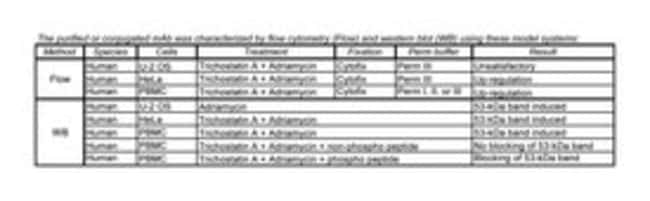
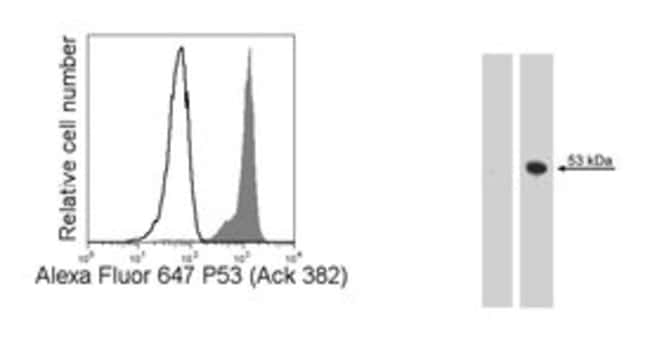
Intracellular Staining

Specifications
| p53 (acK382) | |
| Monoclonal | |
| Alexa Fluor 647 | |
| Aqueous buffered solution containing BSA and ≤0.09% sodium azide. | |
| Human p53 acetylated Peptide | |
| 50 Tests | |
| Cell Biology | |
| Human | |
| IgG1 κ |
| Flow Cytometry | |
| L82-51 | |
| TP53 (acK382) | |
| Mouse | |
| Affinity Purified | |
| RUO | |
| Primary | |
| Store undiluted at 4°C and protected from prolonged exposure to light. Do not freeze. |
Product Content Correction
Your input is important to us. Please complete this form to provide feedback related to the content on this product.
Product Title
Spot an opportunity for improvement?Share a Content Correction